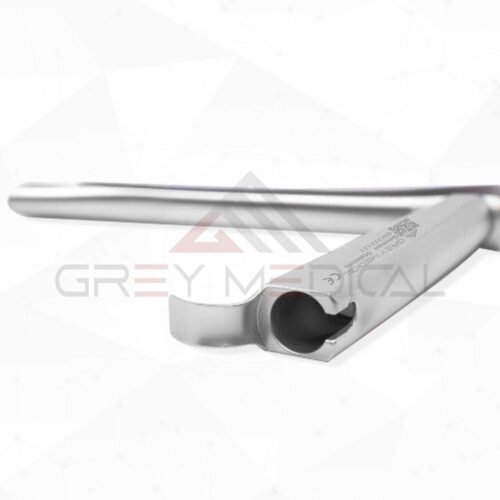
Overview of Grey Medical Operating Laryngoscopes for ENT Professionals
Otolaryngology is a rather complicated area, and patients can receive proper care there in conditions of precision and novelty. That is why Grey Medical offers ENT specialists operating laryngoscopes. We’ll show unique features and advantages of operating laryngoscopes made by Grey Medical. Emphasize key words such as “operating laryngoscopes“, “Kleinsasser“, “laryngoscope suspension” with their detailed description.
What are operating laryngoscopes?
Operating laryngoscopes are special instruments employed by the ENT professional in viewing and treating pathologies of the larynx. They have become an indispensable part of modern medical practice, enabling surgeons to carry out procedures that are complex and accurate. A laryngoscope, held in the operator’s hand, provides an unobstructed and magnified view of the laryngeal structures with stability during surgeries..
Grey Medical’s Range of Operating Laryngoscopes
Grey Medical provides a wide range of operating laryngoscopes that best fit the various requirements of ENT specialists. Most versatile and reliable, the Dedo Operating Laryngoscope has earned repute due to its ergonomic design and great precision in providing complete ease during the conduct of critical procedures. Is the Dedo laryngoscope an operating microscope? Not precisely, though it is also used for very clear visualization; however, it has a different function since it allows for direct access to the larynx without magnification.
Grey Medical’s Operating Laryngoscopes Feature-At-A-Glance
- The Kleinsasser approach, applied by Grey Medical on their laryngoscopes, expresses great functionality for the surgeon’s comfort.
- Laryngoscope Suspension: Advanced integrated laryngoscope suspension systems in the equipment offer stability, hence reducing hand fatigue and allowing for longer procedures.
- Special Operations Laryngoscope Set: The special operation laryngoscope set by Grey Medical includes an array of instruments that meet various surgical requirements, from routine diagnostic to complicated airway management.
Benefits to the ENT Professional
- Improved Accuracy: Grey Medical laryngoscopes are made from the best materials, which allow for perfect visualization and intervention.
- From Kleinsasser laryngoscope to Dedo operating laryngoscope, Grey Medical is able to outfit a set that can be used in versatile applications.
- Ergonomics: The thoughtful designs consider comfort for the surgeon during procedures, making them less burdensome.
Applications of Laryngoscopes by Grey Medical
Operating laryngoscopes from Grey Medical are designed for
- Microlaryngeal surgeries
- Airway management
- Biopsy collection
- Removal of foreign objects
- Selection of Appropriate Laryngoscope
A proper operating laryngoscope proves instrumental in yielding desired results. The entire range of Grey Medical operating instruments, such as the Dedo Operating Laryngoscope, is specifically made with an ear, nose, and throat specialist in mind, ranging from simply diagnostic to astoundingly complex.
Professional Laryngoscopes: Types, Uses, and Applications
Grey Medical offers a wide variety of high-quality surgical laryngoscopes. Below is a quick guide on its different types, applications, and uses to assist ENT specialists in excelling in surgical practice.
Direct Laryngoscope
How It Works:
ENT specialists use direct laryngoscopes to directly view the insides of the throat and surrounding structures. They are available in two types; rigid and flexible. The former helps either in surgical procedures or in removing the sensitive tissues of the throat. While the latter is preferred whenever there is a need for better visualization. These laryngoscopes use rigid metal blades to exercise maximum control. They come with different sizes of blades to suit different needs.
Uses:
Direct laryngoscopes help in analyzing the larynx and the surrounding structures. With its integrated light source, they help in removing any growths. They enable the surgeon to perform biopsies when needed. These laryngoscopes work best in procedures that require high-definition visualization in people of all ages.
Indirect Laryngoscope
How It Works:
Indirect laryngoscopes provide indirect visualization through optics and angled mirrors. They come with a rigid frame structure which mitigates the need for direct alignment. When inserted, they use a mirror which is placed at the back of the throat for reflecting the view to the doctor. The professionals usually insert the scope through the nose. This allows the surgeon to examine without actively manipulating the patient’s neck.
Uses:
Whenever the direct approach fails to give optimum results, an indirect laryngoscopy is practised. Indirect laryngoscopes are particularly important during flexible examination of the ears, throat, and nose. These professional laryngoscopes provide maximum control during the examination.
Video Laryngoscope
How It Works
A video laryngoscope uses a high-resolution surgical camera which projects the video for detailed visualization. The video is then displayed on the screen in real time. It allows the surgeons to holistically view the surgical site without any need for a direct view. Video laryngoscopes accommodate different patient anatomies with their carefully crafted set of blades which can be picked and used.
Uses
Video laryngoscopes are particularly employed to enhance visualization in low-visibility areas. They are specifically crucial for team monitoring and group examination. Whenever there is a need for airway management training and complex intubations, video laryngoscopes are preferred.
Fiber Optic Laryngoscope
How It Works
Fiber Optic Laryngoscopes are extremely flexible examination tools that use fibre-optic technology to illuminate the airway. Due to their flexibility, they allow surgeons to examine hard-to-reach parts of the airway. They come with multiple light intensities and accessories, giving ample choices to the surgeons.
Uses
These are particularly useful for patients who have a disability or restricted neck mobility. In cases of sensitive airways, fibre-optic laryngoscopes are generally preferred. They are used in Intensive Care Units where patients can’t cooperate in the procedure.
Common Types of Laryngoscope Blades and Their Specificities
Below is a quick overview of the common types of laryngoscope blades and their specificities:
Macintosh Blade
The Macintosh Blade is the most common laryngoscope blade. It is designed in a curved configuration which enables surgical practitioners to view the larynx in great detail. They find usage in adult airway management, where size#3 and size#4 are commonly preferred.
Miller Blade
Miller Blades are straight with a long tip. They are mostly used in pediatric patients, where size#0 is majorly used for premature infants and size#1 for healthy infants.
Other Blade Types
Other blade types include the McCoy Laryngoscope blade which has a slightly hinged tip to lift the epiglottis. Moreover, disposable laryngoscope blades are usually fixed.
FAQs
Q1: Why are operating laryngoscopes used?
They are used to give a detailed view of the larynx and the surrounding structures of the throat. Whether a surgeon has resuscitation or general anaesthesia at hand, operating laryngoscopes works wonders. They find usage in nearly every hospital department, from intensive care units to operating rooms.
Q2: How are laryngoscopes used in surgical practice?
To administer a laryngoscope, there is a need to position the patient, open the mouth, lubricate the tip, and insert it while keeping its position on the right side of the mouth. The tongue can be swept with the help of a blade, down into the throat where it helps in lifting the epiglottis. When the glottis is visible, the tube can then be inserted to the desired depth.
Q3: What is the most commonly needed laryngoscope blade in practice?
Mostly, during surgical and standard examination procedures, a curved Macintosh blade is used to perform laryngoscopy. It is patient-friendly and easy to manipulate.
Conclusion
The Grey Medical operating laryngoscope epitomizes the state of the art in the field of otolaryngology. Offering the state-of-the-art qualities in laryngoscope suspension, Kleinsasser designs, and specialized sets, these will indeed help the ENT professional in the practice of their art or science with more precision and skill.
Be it the use of a Dedo operating laryngoscope or having to peer at their special operations laryngoscope set, Grey Medical has something for you. If you are an ENT professional looking to take your surgical armamentarium to the next level, then Grey Medical’s operating laryngoscopes are an investment in excellence. Explore their range today and feel the difference it can make in performance and patient care.