

ENT Instruments: Types, Uses, and Complete Guide for 2026
ENT instruments work as weapons for ENT specialists. Get insights into the types and uses of ENT instruments in this complete Grey Medical guide for 2025.
ENT instruments work as specialised tools to treat the conditions of the head and neck. Typically, healthcare professionals use ENT sets to diagnose and examine the troubling conditions. Having the right OT instruments makes the process of examination easy for the specialist.
Considering the growing demand, Grey Medical has set a separate category for ENT surgical sets. We have a range of top-grade OT instruments which can be relied on in times of need.
In this complete Grey Medical guide for 2025, we will have a closer look at the types and uses of ENT instruments. Moreover, we will discuss their applications in detail. Continue reading to explore!
Defining ENT Instruments
Every surgical sector has specialised doctors. Similarly, some otolaryngologists use high-grade ENT instruments. These instruments work to explore and diagnose any problem in the nose, ear, and throat.
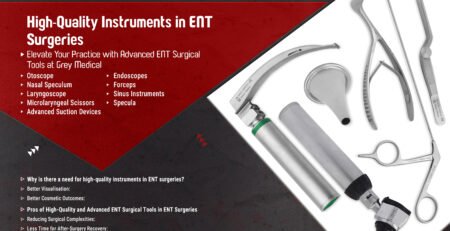
Usually, every surgical instrument has a specialised structure according to its function. Keeping this in mind, ENT instruments have a well-designed, narrow structure. This structure allows them to access the hard-to-reach areas down the throat, in the ear canal, and in the nasal passage. The major ENT instruments include otoscopes, mirrors, ENT forceps, and nasal specula, among many others.
How do ENT tools benefit the Surgical Practice?
Below is a quick overview of how the ENT tools benefit the surgical practice:
- Safe Instruments: Every ENT instrument is made by following the protocols of minimal invasion.
- Better Access: The nasal passage, ear canal, and the larynx are all hard-to-reach, narrow areas. To avoid hindrance, ENT tools have been made. With their narrow structure, they make the navigation easy.
- Picturization of the Affected Areas: Mostly, in narrow regions of the ear, nose, and throat, the infections can’t always be detected. At such a crucial stage, otolaryngologists use imaging and probing devices like otoscopes, advanced endoscopes, and specula to retract.
ENT Instruments for Diagnosis
Before starting the treatment, the protocol demands professionals diagnose the problem. Typically, the surgeons have specialised diagnostic ENT instruments and ENT sets. It should be noted that these instruments have both an illuminating and a magnifying source. These work to brighten up and zoom in on the problematic site.
Here’s a reflective look at major diagnostic ENT instruments, precisely:
Nasal Speculum
Notably, the nasal specula help stretch the nasal cavity wide enough for examination.
Each nasal speculum has a different configuration and mode of action, such as self-retaining or handheld. For demonstration, the major types are listed, namely:
- Thudichum Nasal Speculum: ENT specialists use their index and thumb fingers to control this nasal speculum. Mostly, they find use in anterior rhinoscopy.
- Killian Nasal Speculum: These self-retaining specula help in turbinate reduction surgeries, polypectomy, or septoplasty.
- Vienna Nasal Speculum: Mostly, this speculum uses a spring mechanism. Usually, minor surgical manipulations can benefit from this type.
- Cottle Nasal Speculum: Typically, plastic surgeons use this speculum.
Otoscope
Surgeons require an otoscope to examine the ear canal and the eardrum. An otoscope comprises an ergonomic handle, a source of light, and a retractor structured in a cone.
Below is a quick overview of the major types of otoscopes, such as:
- Pocket Otoscopes: As the name specifies, pocket otoscopes work as handy tools for examination of the ear canal.
- Surgical Otoscopes: During surgeries, surgeons require surgical otoscopes. Through these otoscopes, the specialists can insert other medical tools in the ear canal.
- Video Otoscopes: If you require a detailed video of the insides of the ear for diagnoses, use video otoscopes.
- Standard Otoscopes: Mostly, GPs and practitioners keep a standard otoscope for their daily checkups.
Laryngeal Mirror
This visualising surgical tool provides a clear view of the inside of the throat. Technicians prefer these for their easy maintenance. A round in the autoclave and your laryngeal mirror gets squeaky clean as new.
Headlight and Light Source
ENT practice benefits a great deal from light sources and headlights. Mostly, ENT specialists use LED headlights, halogen headlights, and fibre optic headlights.
ENT Instruments for Surgical Procedures
The anatomical structures of the ear, nose, and throat are different. Therefore, there is a specialised category of ENT instruments for surgical procedures. Whether the professional has complex sinus treatment at hand or microsurgery, surgical ENT instruments help them navigate with ease.
Given is an overview of high-grade ENT instruments for surgical procedures, namely:
Ear Forceps
Accessing ENT tools, like ear forceps, helps with exploring the ear canal. Surgeons use these tools to introduce and remove objects from the ear canal. Usually, this instrument has a narrow configuration. The following types of ear forceps should be noted, precisely:
- Alligator Forceps: In case foreign objects enter the ear canal, such as beads, alligator forceps can be used. Furthermore, they help GPs remove earwax and insert grommets.
- Micro Ear Forceps: These forceps help during eardrum repair surgeries and cosmetic procedures.
- Wilde Ear Forceps: These ear forceps help pack gauze inside the ear canal during surgeries.
Tonsillectomy Instruments
The removal of tonsils is assisted by the use of tonsillectomy instruments. The following tools are a must-have, such as:
- Mouth Gag: Aiding tools which help keep the mouth open are known as mouth gags. Mostly, surgeons prefer using the Davis Boyle Mouth Gag.
- Tonsil Holding Forceps: Typically, during the operation, practitioners use tonsil holding forceps to cast a firm grip on the tonsils.
- Tonsil Snare: It helps chop the loose tonsil from the surface area.
In addition to these, Grey Medical offers suction tubes with different configurations of ENT suction tips, a hurd dissector and a pilar retractor, tonsil knives, etc. Equipped with these surgical instruments, the tonsil set can be relied on!
Nasal Forceps
The probing and grasping tools which help take out any foreign object from the nasal passage are known as the nasal forceps. In addition to this crucial role, nasal forceps help pick up bone fragments during surgical procedures.
Note the following variety of nasal forceps, categorised according to their function:
For Tissue and Polyp Removal
- Blakesley Nasal Forceps: These have fenestrated jaws in a cup-shaped construction. Further on, they can be down-bite, up-bite, or straight.
- Gruenwald Nasal Punch Forceps: Mostly, surgeons use these to pick bone fragments.
For Bone Manipulation
- Walsham Septum Straightening Forceps: Practitioners can use these forceps during reduction procedures, such as while fixing nasal fractures.
- Asch Septum Forceps: Mostly, worked in composition with the Walsham septum straightening forceps, these have a particular purpose. Typically, these forceps help straighten up the septum.
For Dressing
- Bayonet Forceps: Surgeons benefit from bayonet forceps during interventions. These help pack gauze into the nasal cavity. Consequently, the bleeding stops.
Sinus Surgery Instruments
Functional Endoscopic Sinus Surgery (FESS) is a critical surgical intervention. Typically, surgeons pair the endoscopes with premium sinus surgery instruments to streamline the procedure.
The mentioned ENT tools help with the sinus surgeries, such as:
Nasal Endoscopes: Endoscopes work to visualise the insides of the sinus. Ideally, they have a long tube with a light source and an HD camera.
Rongeurs and Punches: Usually, these come in handy to cut the bones during the sphenoid sinuses or the ethmoid.
Elevators: The cartilage can easily detach from the mucosal lining with the help of Cottle septum nasal elevators and Freer punches.
In addition to these, surgeons use seekers, Frazier suction tubes, and curettes when required.
Tracheostomy Instruments
A procedure which involves creating an opening in the front of a patient’s neck is known as a Tracheotomy. The procedure uses tools like a tracheal hook for elevating the trachea, tracheal dilators for widening the stoma, and an airway tube for keeping the airway from collapsing.
Common ENT Examination Tools
Mostly, the common ENT examination tools assist the everyday functions of examining and aiding.
The following are common ENT examination tools that every ENT set must possess, namely:
Tongue Depressor
These aiding tools help press the tongue down for better visualisation. Resultantly, the diagnosis becomes easy.
Tuning Fork
This two-prong metal instrument helps check for patients with hearing loss.
FAQs
Q1: Can you name the major ENT forceps?
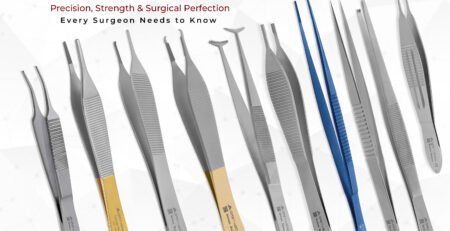
Yes, the following ENT forceps are a must-have, such as Tilley’s dressing forceps, which work on gauze; Negus artery forceps, which facilitate tonsillectomy; and Luc’s forceps, which allow surgeons to navigate sinus surgeries with ease.
Q2: What is the purpose of ENT suction tips?
ENT suction tips work to draw out fluids of any kind, such as phlegm, blood, etc.
Revolutionise Your Surgical Field with Grey Medical’s Top-Notch ENT Instruments
Acquiring top-grade OT and ENT instrument sets determines the surgical outcomes. In the case of high-quality tools, patient safety and surgical success both amplify. Therefore, we offer premium CE and FDA-approved ENT instruments. The complete guide for ENT instruments covers everything in detail. If required, contact us now!





Leave a Reply