

 Bone Curettes, Dental Instruments
Hemingway Bone Curettes
$20.00Select options This product has multiple variants. The options may be chosen on the product pageQuick View Bone Curettes, Dental Instruments
Lucas Surgical Curette
$25.00Select options This product has multiple variants. The options may be chosen on the product pageQuick View Bone Curettes, Dental Instruments
Miller Bone Curette
$20.00Select options This product has multiple variants. The options may be chosen on the product pageQuick View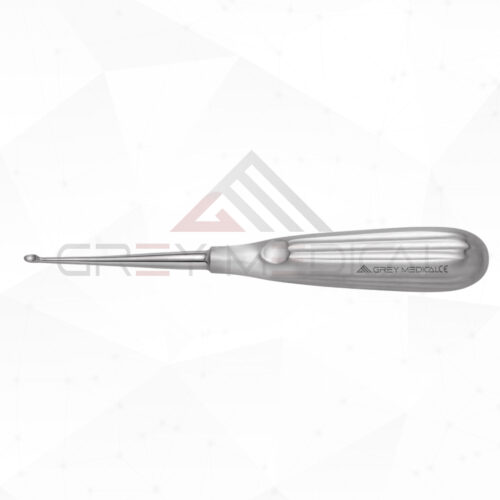 Bone Curettes, Dental Instruments
Volkmann Bone Curette
$25.00Select options This product has multiple variants. The options may be chosen on the product pageQuick View

Dental Bone Curettes
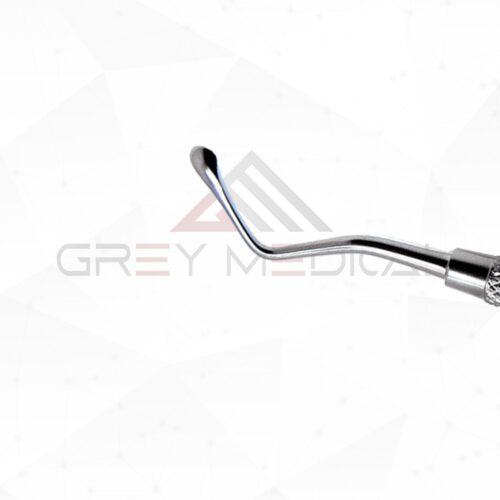
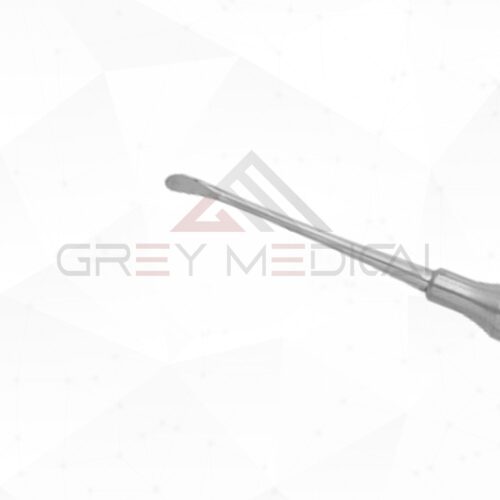
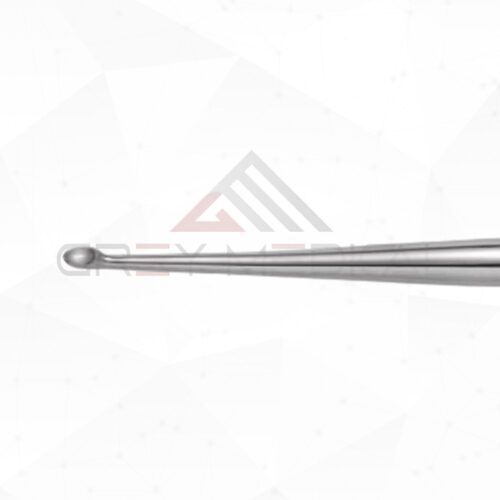
Dental bone curettes are hand-held surgical instruments used to scrape, debride, and clean bone surfaces and extraction sockets during oral and maxillofacial surgery. Each curette has a small scoop-, spoon-, or ring-shaped working end with sharpened edges that removes granulation tissue, cysts, and bone debris in a controlled way. Grey Medical manufactures bone curettes in reusable, autoclavable German stainless steel as part of its dental surgery instruments range.
Types of Dental Bone Curettes
Bone curettes are grouped by their working-end configuration: single-ended or double-ended.
- Single-ended bone curettes have one scoop- or spoon-shaped tip attached to the handle. Their standard length makes them easy to manipulate during a procedure. The Molt surgical curette is a common single-ended pattern.
- Double-ended bone curettes have two working ends on either side of a central handle, so the clinician can flip the instrument to reach different sides of a socket without changing tools. Oval spoon-shaped tips give control when contouring bone, while round scoop-shaped tips work inside hollow sockets to clean out debris.
Dental Bone Curettes Chart: Patterns and Uses
| Instrument | Configuration | Primary Use |
| Lucas Surgical Curette | Double-ended, spoon-shaped straight and curved tips | Post-extraction socket debridement and periapical curettage |
| Hemingway Bone Curette | Double-ended, finely sharpened oval working ends | Scraping alveolar bone surfaces and periodontal procedures |
| Miller Bone Curette | Double-ended, straight and curved configurations | Scooping and cleaning confined bone cavities |
| Volkmann Bone Curette | Sharp, oval, spoon-shaped tip | Curetting tooth sockets and excavating diseased tissue or cysts |
| Williger Bone Curette | Double-ended, oval cup-shaped tips in several sizes | Accurate bone scraping and tissue cleaning in debris removal |
| Brun (Bruns) Bone Curette | Straight oval scoop with sharp edges on a solid hexagonal handle | Bone contouring and tissue removal in surgical procedures |
How to Choose Dental Bone Curettes
- Match the curette pattern to the depth and type of surgical procedure.
- Choose the right blade width, handle length, and scoop curvature for the site.
- Check tip quality and cutting-edge finish for controlled tissue separation.
- Select a handle grip, weight, and diameter that suit granulation tissue removal.
- Prefer reusable German stainless steel that withstands repeated cleaning and sterilization.
- Confirm any sizing or customization requirements before ordering.
- Verify the manufacturer’s documentation and certifications.
Bone curettes differ from the periodontal curettes used for scaling and root planing. If you need instruments for calculus removal, see Grey Medical’s periodontal curettes and scalers or read the guide on dental scaler vs curette differences.
Pair Bone Curettes with Extraction Forceps and Elevators
Bone curettes are usually used after a tooth has been removed, so they pair naturally with extraction tools. Combine them with dental extraction forceps, dental elevators, and periosteal elevators for flap elevation, extraction, and socket clean-up. For bone shaping after curettage, browse bone treatment instruments. You can build a complete set from Grey Medical’s surgical-grade steel range or choose a ready-made dental surgery set.
Bone Curettes FAQs
What are dental bone curettes used for?
Dental bone curettes are used to remove granulation tissue, cysts, and bone debris and to clean the tooth socket after an extraction. They are also used to scrape alveolar bone surfaces in periodontal and oral surgery.
What is the difference between single-ended and double-ended bone curettes?
Single-ended curettes have one active working tip on the handle. Double-ended curettes have two working ends, often in different sizes or angles, on either side of a central handle, so one instrument covers more of the surgical site.
What is the difference between Lucas and Hemingway curettes?
Lucas curettes have a sharp, spoon-shaped working end suited to scooping out deep extraction sockets. Hemingway curettes have oval, bowl-shaped ends that are better for debriding wider alveolar bone surfaces.
Are bone curettes the same as periodontal curettes?
No. Bone curettes have scoop- or spoon-shaped cups for scraping bone and cleaning sockets, while periodontal curettes such as Gracey or Columbia patterns have thin blades for removing calculus from root surfaces.
Can I buy bone curettes in German stainless steel?
Yes. Grey Medical supplies bone curettes in reusable, autoclavable German stainless steel in several patterns and sizes. For bulk or clinic orders, you can request a quote or see the wholesale surgical instruments program.